
Unfortunately I was not recording it, otherwise I would explain into the voice memo precisely what I was doing, and will plan this for future sessions. As I recall may have been the case here and is frequently at large, changing weather can sometimes make very dramatic effects in the way any piano sounds. Industry standards for concert pianos in performance venues generally dictate that they don’t get practiced on for hours, but this sometimes differs from expectations at an educational institution, where students must have access to try out their technique and to have a learning experience. Still, expectations put on the piano tuner are no less than they would be in a professional venue, where practicing outside the context of rehearsals should customarily not be imposed on concert instruments.
The stability of the voicing can really only be achieved by careful attention to mitigating humidity fluctuations and moderating times of usage only for when it’s really essential. If I don’t stay on top of this voicing, one day I could suddenly be faced with lots of work to get the piano back to sounding in a very particular way. Incremental changes are the goal. The psychology of how we remember sound and the accuracy in our memory of a particular tonal profile, comes into play.
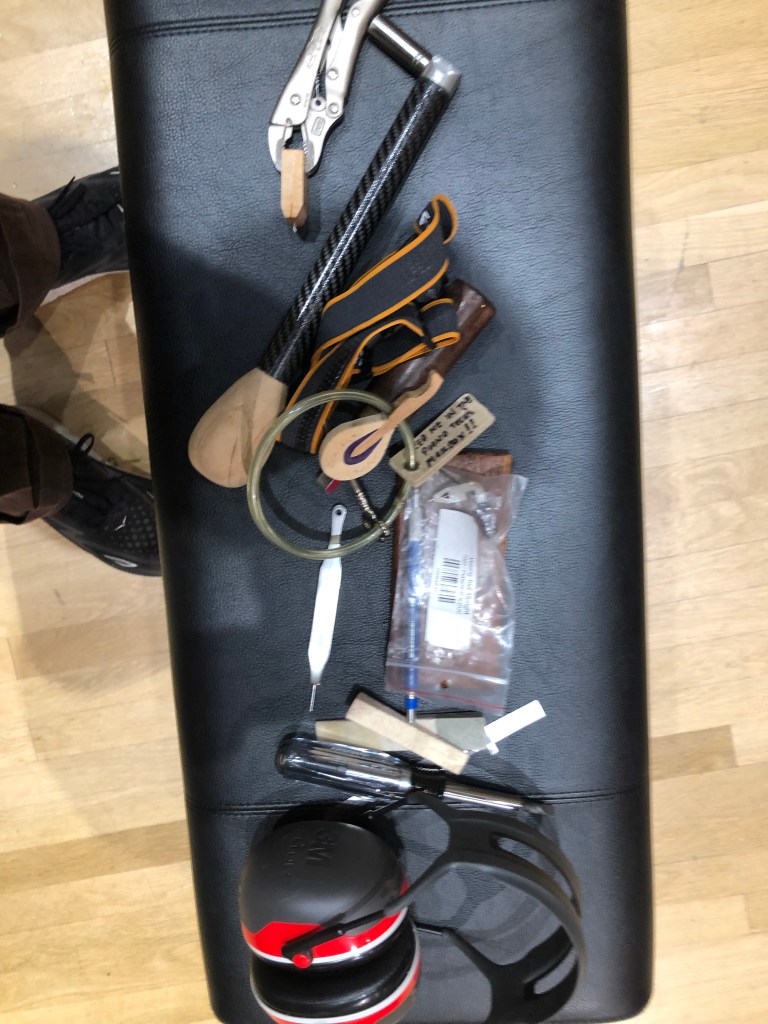
There is a block of wood with a straight row of needles which I used here to wonderful success for enhancing the cushion and elasticity of the upper shoulders inside the piano hammers. You can see that tool I made just to the left of my tuning lever, which I also made to fit my own hand. It doesn’t take much, but knowing exactly how to use the various implements and techniques to change the way the vibrations travel is the most elusive and highest crest of a piano technician’s skillset. It’s also a task which is containing some of the deepest mysteries for me and I keep learning about wielding this multiverse of soundscapes.


Leave a Reply