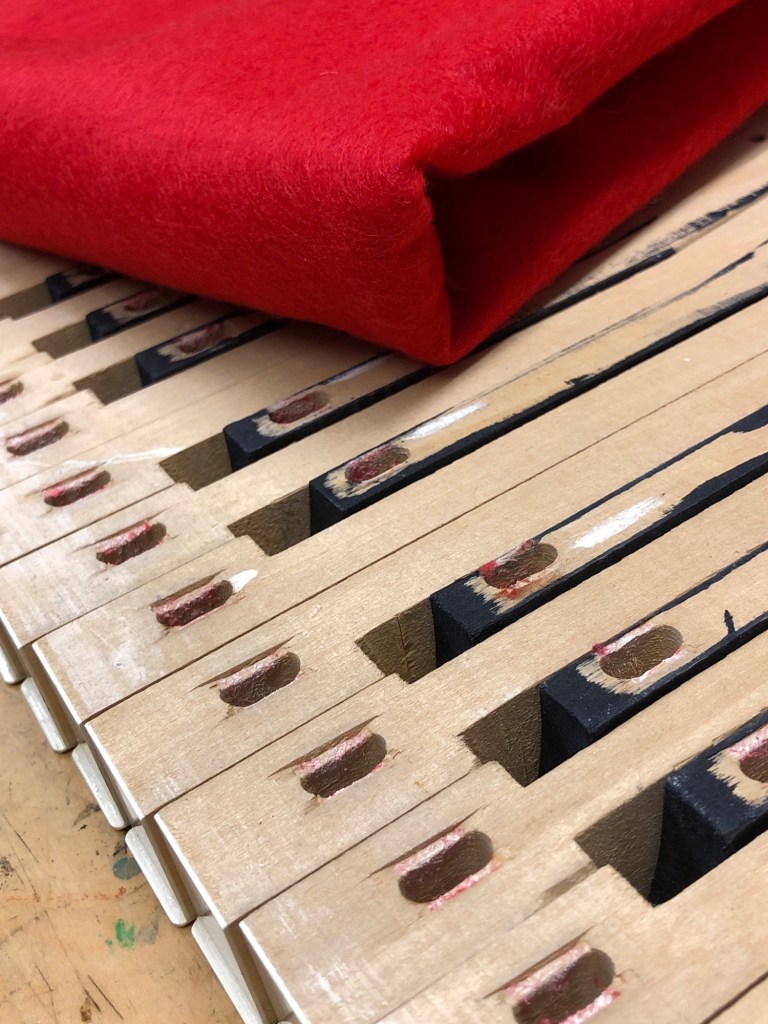
I steamed out the old bushings from these mortises and they’re ready for new cloth to get installed.
Jahn Pianoteille supplies a really good dedicated key steaming machine, which I’d like to buy someday. For now, I use my wallpaper steamer with great success. Steam is the cleanest way to extract a set of old bushings en masse. Other methods involving glue removers can sometimes stain the keys.
When these Baldwin Hamilton keys were manufactured the edges of the cloth were cut by a method which punched the wood of the keystick surrounding the mortise into the surfaces of the bottom of the keys, leaving a step where the flange of the cloth was recessed.
Unfortunately this is not really a great thing when rebushing these keys. My HDPE Spurlock sized cauls have a flange that overhangs the slim step.
I’ve addressed this in the past by processing the key bottoms on a router table, to cut a dado, as some other manufacturers do from the get go, such as Yamaha, to accommodate a recess for the bushing cloth flange.
Another solution I’ve employed with success is to just be mindful of how I slice the end off, and pack it into that step a little bit. They can be cleaned up to a limited extent after the cauls are extracted.
But why this matters is because the depth of the keystroke is governed by this bottom surface. Thus, it ought to remain as flat as possible around the cloth washer. It becomes important to mark the front cloth washers to ensure that their orientation stays constant, because if after absorbing the impression of the underside of the key, a slight rotation of the cloth round will inadvertently tamper with the dip.
Another thing of interest which I take note is the centering of the mortise on the width of the keystick, which is critical for the sharps and a QC issue:
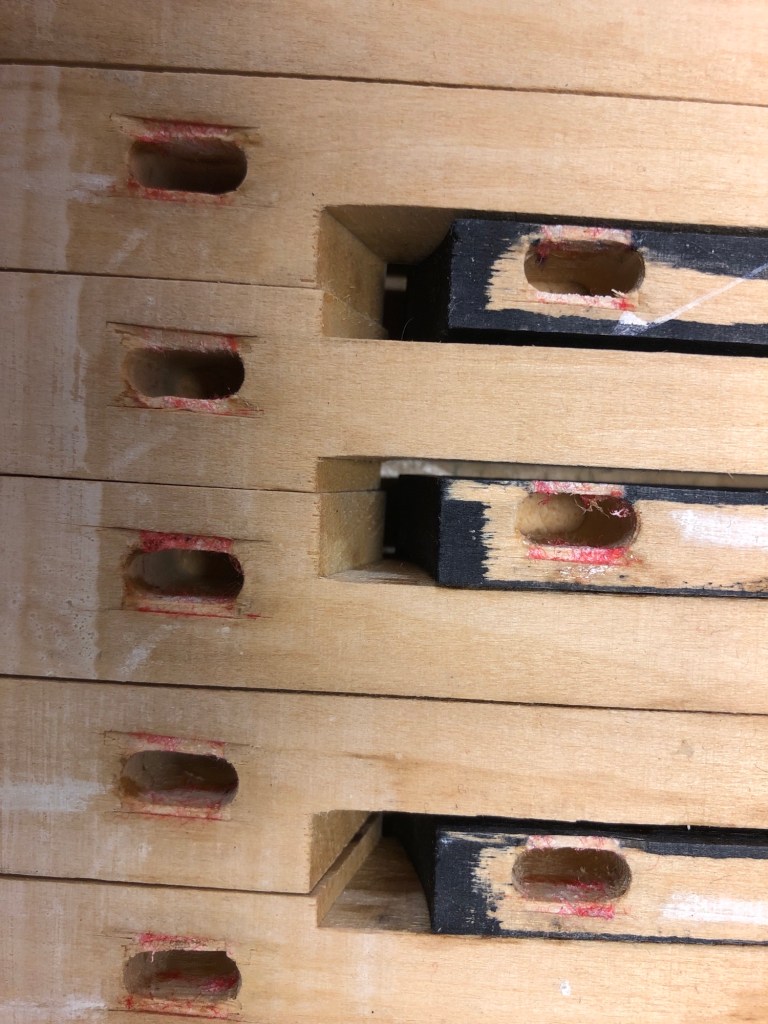
Having a thinner wall on one side because the pin was off-center, makes cutting the end of the new cloth that much more difficult, and to be honest, it was never perfect. Anyway, I do my best job to do a beautiful installation of the new bushings.
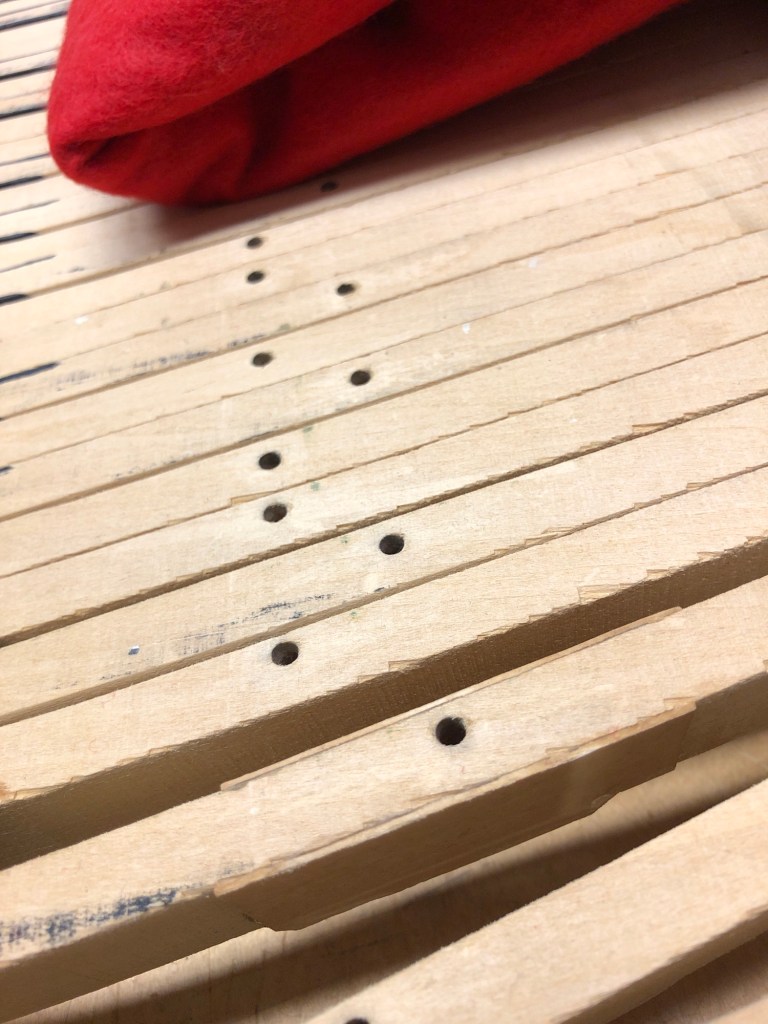
There once was also a broken key on this piano that had been repaired by applying a veneer on either side of the balance point… the balance point is where they always break, for obvious reasons. Also, notice the balance hole on that key and it’s neighbor is quite uncentered.
The glue of choice for bushings is hot hide glue aka violin glue, because of its reversible nature in the future. A more resistant Casein glue is (I think) what Baldwin initially used here, and the steam extraction powered through that quite well, where chemical debonders would struggle with casein.
If memory serves, the notion of using PVCE glue was endorsed by a member of our guild, Fred Sturm, RPT, of UNM, for not only its future reversibility but mainly it’s ability to allow felt sizing products like VS Profelt to be used in the future, which is otherwise risky on bushings installed by the historical animal glue. PVCE became difficult to obtain several years back because of tightened regulations on what they use to make it. Still I have a small quantity, which should probably be used soon before it passes its shelf life, if it has one. PVCE is intended more for gluing non-porous substrates, like acrylic keytops, but for that I’ve switched to Roo Glue or Melamine Glue.


Leave a Reply