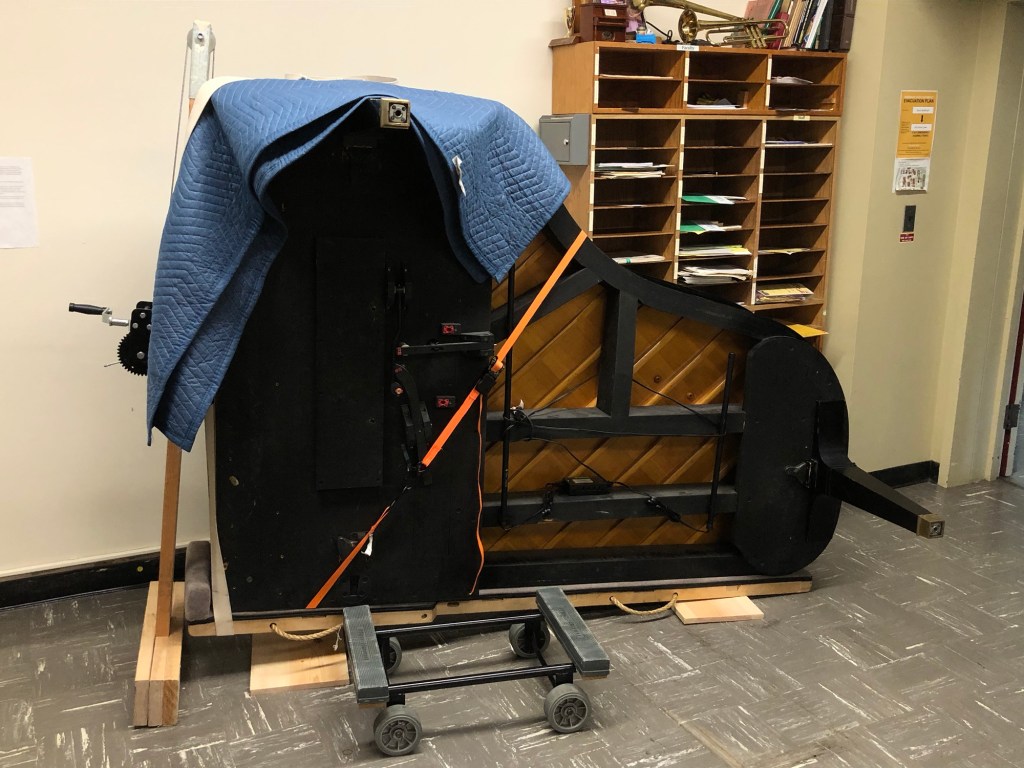
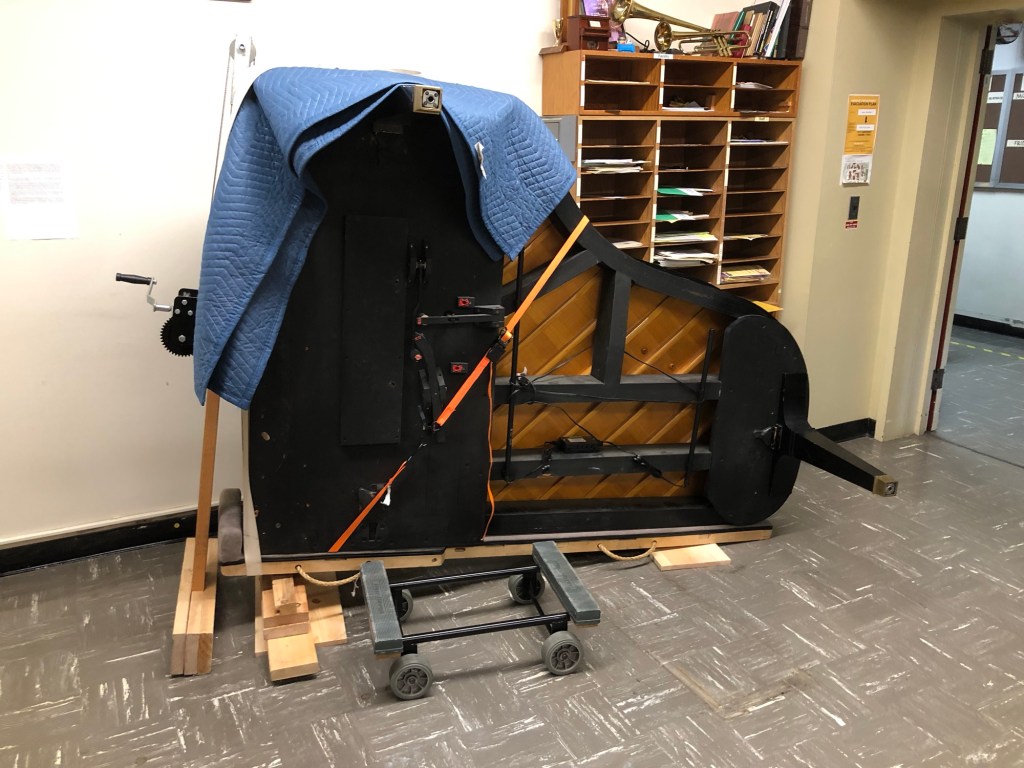
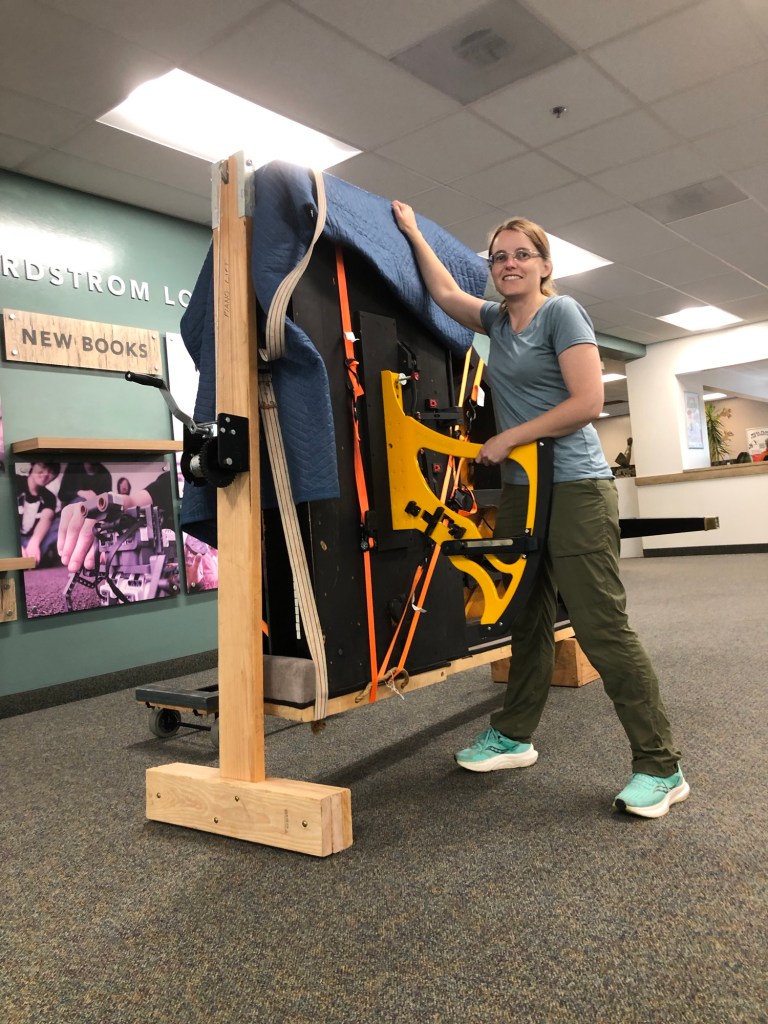
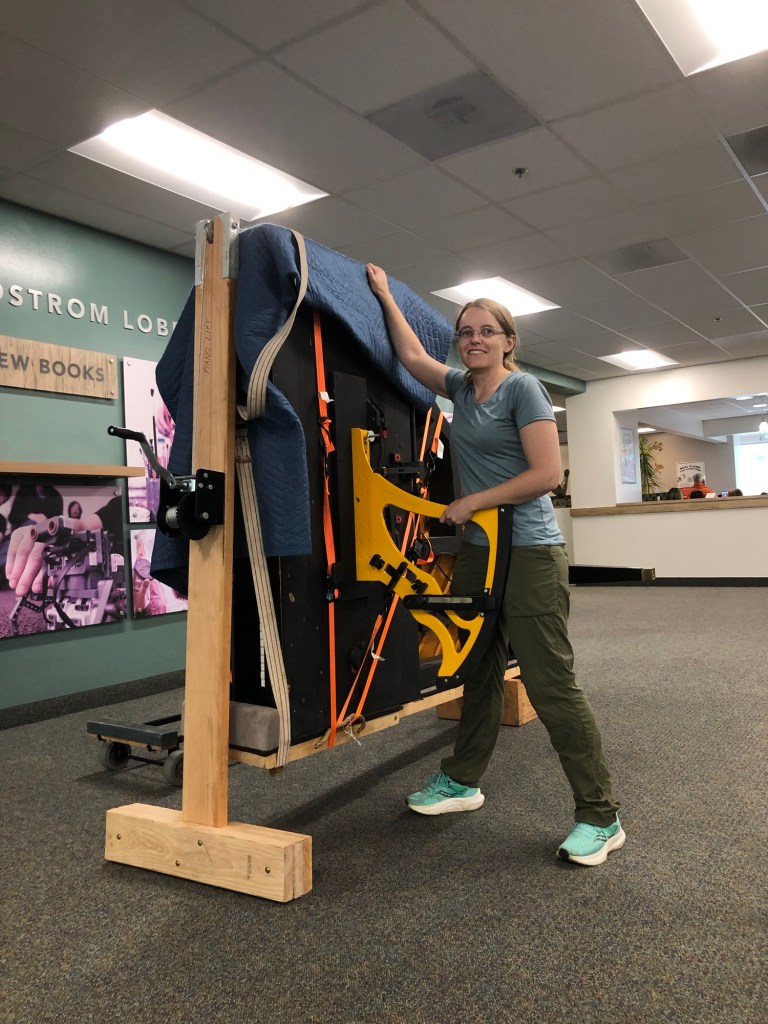
Proof of concept. I created a “no-effort lifting device” that allows me to elevate heavy objects that are basically flush with the ground by cranking a 2000-lb winch bolted to a 2×6 with a pulley wheel at the top. The base of the tool has non-skid non-floor marring tread and offers lateral stability. The hook at the end of the wire rope cable attaches to a movers strap, and there needs to be enough allowance to slip this movers strap underneath, which is why I preset some riser timber pieces between the sled and ground. This piano weighs about 780lbs, and it now needs to go up onto a dolly that’s about 9-inches off the ground.
There are many advantages to the floor level tilting method that make it much safer than tilting directly onto a raised preset-sled/dolly arrangement. Firstly, our human energy input is less costly to roll the piano over just onto the floor as opposed to it being already at an elevation 9-inches higher, which up until very recently was how I was always doing it. The effort gets more intense when you have to push the piano higher up effectively onto a platform that is already up in the air. As you can imagine, in this case I needed some special “apple boxes” supporting the sled that were dimensioned to be almost exactly the height of my dolly of choice. As the wood would shrink and swell seasonally, I found that the size of these propping boxes would fluctuate.
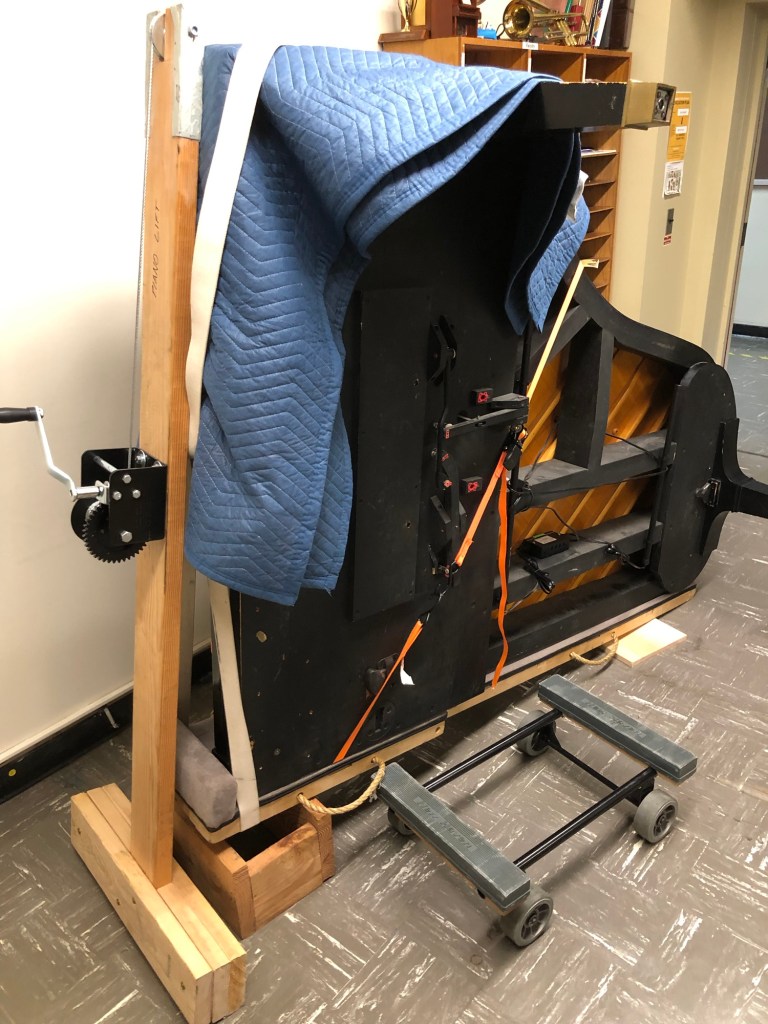
You can see my “apple box” which I made to match the exact height of my dolly of choice. By propping up one end and going around to hoist the other, we got the dolly underneath the sled.
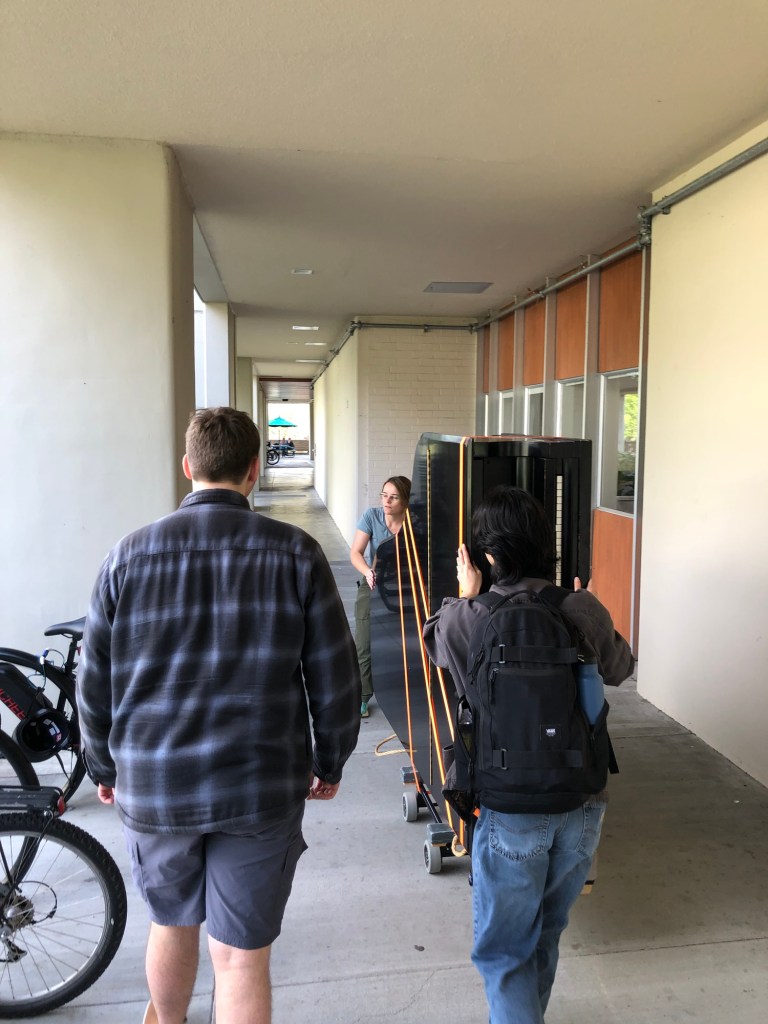
Traversing variable terrains with a piano is a safer job with several guiding hands. All the bumps in the road, slope gradients, and our directional vector of travel, needed careful analysis, evaluation, and planning on the path to our destination. Having these helpers “watch tipsy,” or gently guide and brace the side it may have otherwise tended to lean is essential, while others control the load, speed, and momentum, picking up and pivoting by wheelie as necessary. You can never rush this, and there’s no such thing as going too slow. Safety is always the primary concern, safety of the student helpers, safety of the instrument, safety of us staff people.
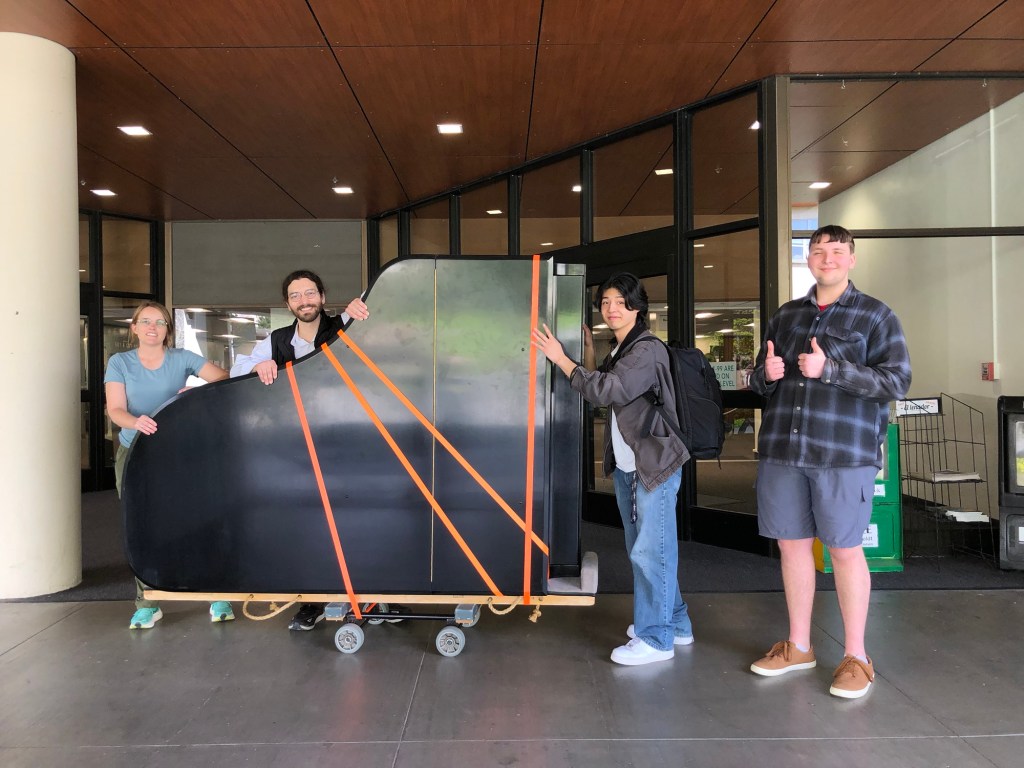
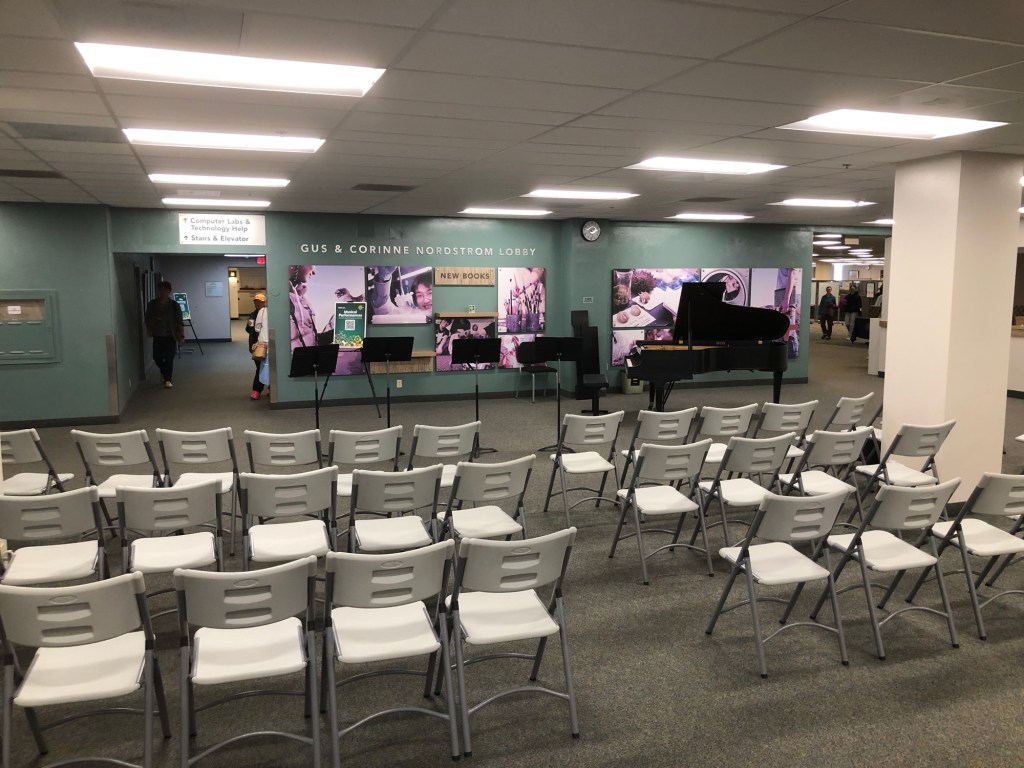
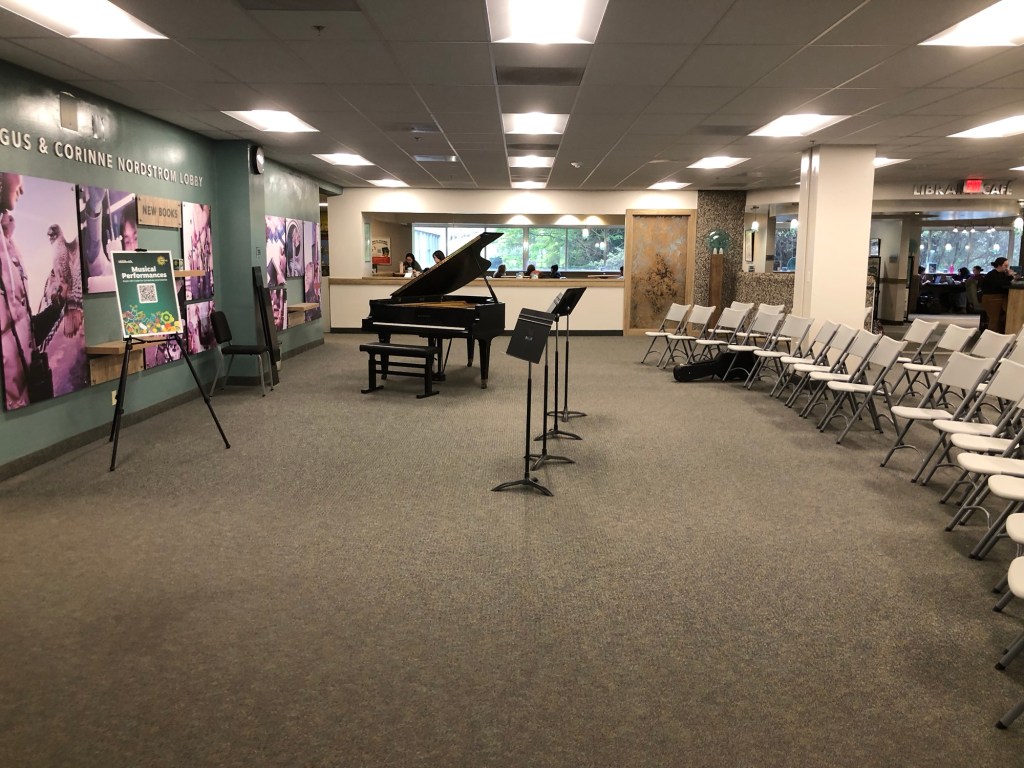
Arrival, and our helpers getting a great learning opportunity.
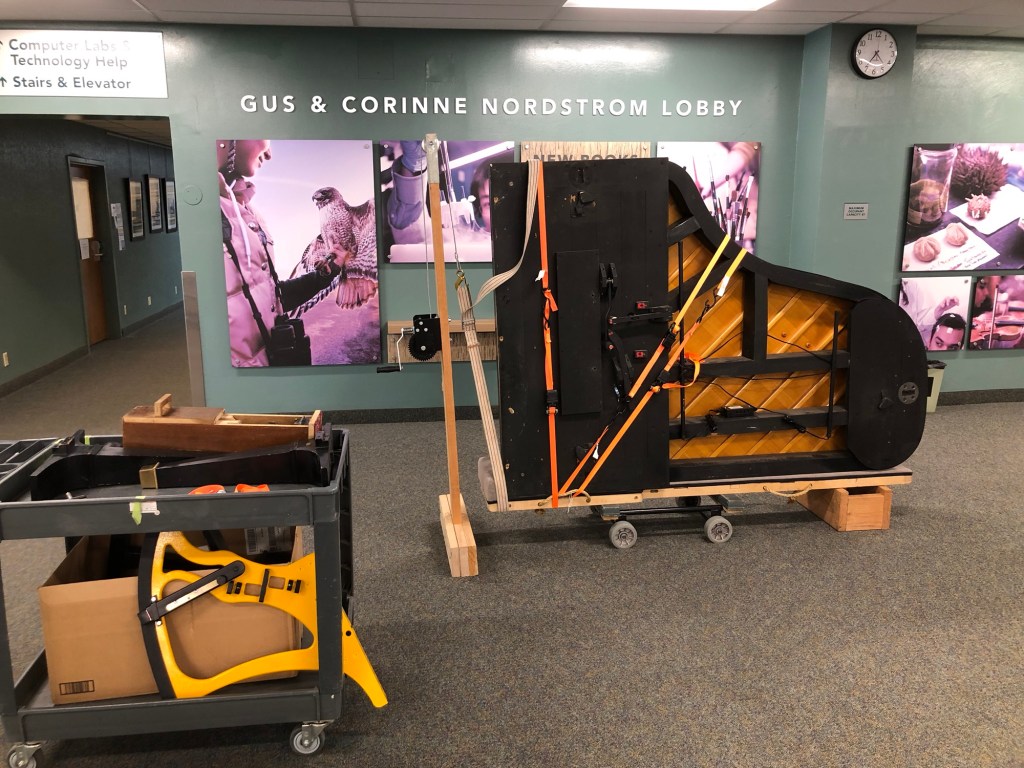
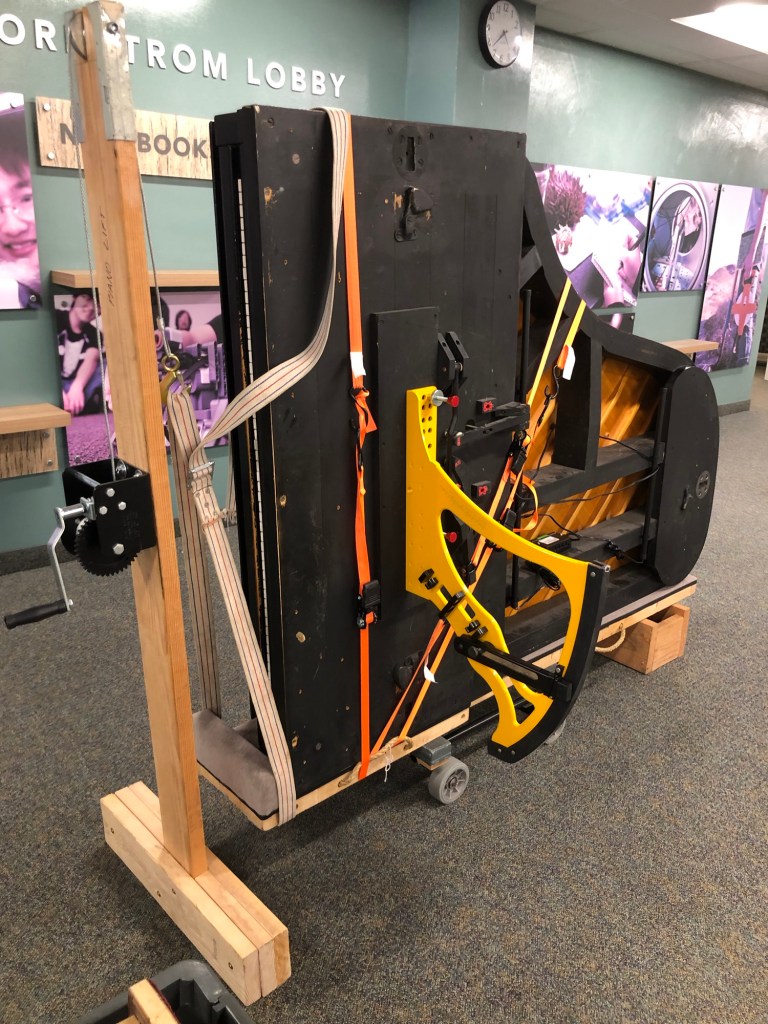
Again using my no-muscle winch hoist.
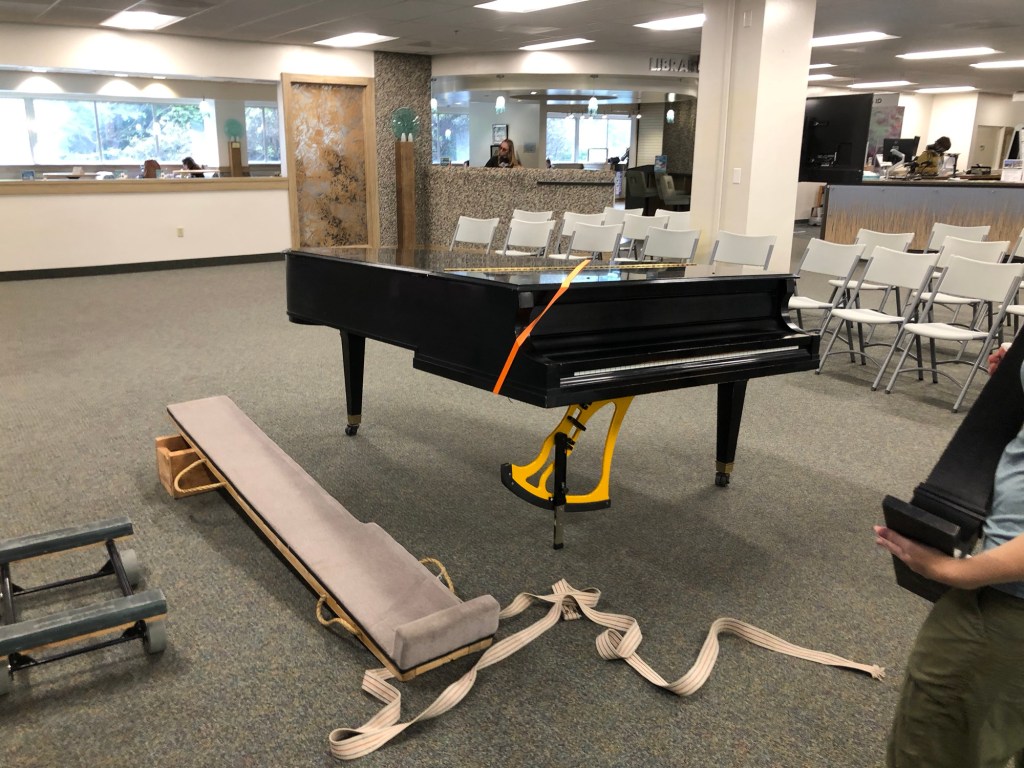
After lowering the keyboard end and it making touchdown with the ground, we shifted the spine edge of the piano into the middle of the sled, and then rolled it off the sled easy as 1-2-3 using the moondog. This moondog rotator device has an awesome telescopic leg that can be adjusted to automatically extend when I picked up the bass corner. Thus the last leg ends up already with sufficient clearance to install.
Of particular interest to me is whether I can reverse engineer the intuitional placement of the apple box at the tail end of the piano to pre-set this into position before we rotate the instrument counterclockwise up onto the sled. That might be an added aspect we could test the waters with, for another day.
As with improving at almost everything in the realm of piano work, it begins with a thought experiment, working out all the details and cultivating a deep almost second nature understanding of how the physics will play out, verification of the hypotheses we make, evaluation of the results, in a general adherence to the scientific method.
And this extends beyond merely moving, into all domains, tuning, voicing, regulation, restoration and remanufacturing, etc.
It’s what keeps this profession engaging for a lifetime, the promise that I’ll keep learning to do stuff better and better, for the beauty of the art, for the love of pianos.
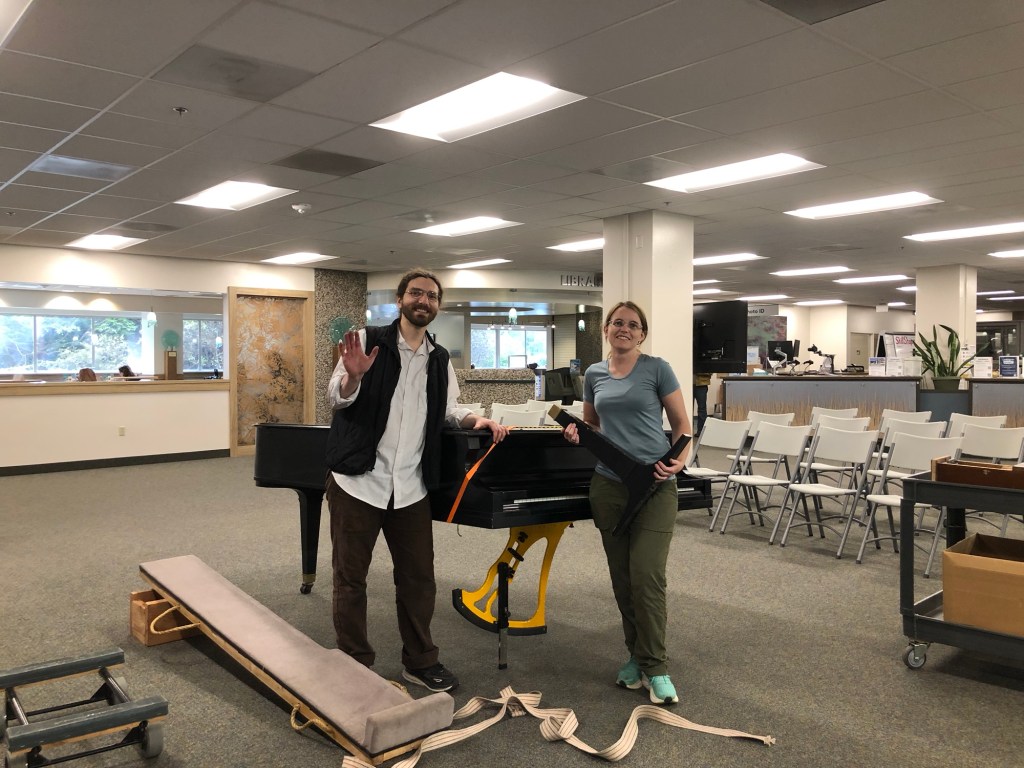
And we are excited for Ideafest performances tomorrow. I will tune it in the morning, as well as chase down some excessive friction in my relatively new keybushings… all for another post on the Baldwin model F #183845. To be continued….


Leave a Reply